 Derila Ergo
Can Your Pillow Affect Snoring? Here's What Research Says
Snoring is usually treated as a nighttime nuisance, but it's actually a mechanical problem: soft tissue in the throat vibrates as air squeezes past it. Head and neck position change the shape of that airway, which is why sleep researchers have spent real effort studying whether a pillow, specifically, can change how much a person snores. Here's an honest look at what that research actually shows.
In this guide
Why Head and Neck Position Affects Snoring
When you lie flat on your back, gravity pulls the tongue and soft palate slightly backward, narrowing the upper airway. That narrower space is exactly what causes the vibration we hear as snoring, and in more severe cases, contributes to the pauses in breathing seen in obstructive sleep apnea. Sleeping on your side, or elevating and supporting the neck so the airway stays more open, is one of the most consistently studied non-surgical ways to reduce that narrowing.
This is the principle behind "positional therapy" — treatments designed specifically to change or maintain head and body position during sleep, including specially shaped pillows.
What the Studies Found
Several peer-reviewed studies have tested head-positioning and anti-snore pillows directly:
- A study on patients with positional obstructive sleep apnea tested a head-positioning pillow designed to avoid flat, on-the-back sleep. Researchers found that this type of pillow could meaningfully reduce snoring in people with mild-to-moderate positional sleep apnea, even after accounting for body weight as a factor.
- A separate randomized crossover trial tested a pillow designed to shift head position during sleep. It found a statistically significant reduction in the objective snoring index while participants used the positioning pillow, and nearly all participants tolerated the pillow well throughout the study period.
- A more recent study on an intelligent, sensor-equipped anti-snoring pillow found that it increased side sleeping substantially compared to baseline, and was associated with a meaningful drop in both breathing pauses and snoring — though a CPAP machine still performed better for the most severe cases.
- Research specifically on non-apneic snorers (people who snore without a sleep apnea diagnosis) found that snoring intensity was measurably lower in the side-lying position compared to lying flat on the back, and that most habitual snorers are in fact "position dependent" — meaning their snoring changes significantly based on posture.
- Not every study found a clear pillow effect. One comparison of a vibrating positional belt against a positioning pillow found the belt was more effective at reducing time spent sleeping on the back, while the pillow alone didn't show a significant difference in that particular study — a useful reminder that results vary across devices and study designs.
Across this body of research, the pattern is consistent: head and body position genuinely changes snoring severity for many people, especially those whose snoring is "positional." A pillow is one practical way to encourage that better position — but it is not a guaranteed fix for every type of snoring.
What Pillows Can't Do
It's important to be direct about the limits here. Snoring has multiple possible causes, including nasal congestion, allergies, alcohol use, excess tissue in the throat, jaw structure, and moderate-to-severe obstructive sleep apnea. A supportive or positional pillow addresses only the posture-related piece of that picture.
- A pillow is not a diagnosed treatment for obstructive sleep apnea, and CPAP therapy remains the clinical standard for moderate-to-severe cases.
- If snoring is loud, frequent, and accompanied by daytime fatigue, gasping, or witnessed breathing pauses, that's a signal to see a doctor or sleep specialist, not just to change pillows.
- Results are genuinely individual — some people are "positional" snorers who respond well to posture changes, and others are not.
Practical Takeaways
- If you or a partner notice that snoring is worse specifically when sleeping flat on the back, positional support is a reasonable, low-risk thing to try first.
- A pillow that supports side sleeping, or that keeps the neck extended rather than compressed, aligns with the mechanism most positional-therapy research points to.
- Give any positional change a genuine multi-week trial, since studies typically measured effects over several nights to weeks, not a single night.
- Treat a supportive pillow as one part of a broader approach — alongside weight management, alcohol timing, allergy control, and sleep position — rather than a standalone cure.
- If snoring is severe or you suspect sleep apnea, talk to a healthcare provider about a proper sleep evaluation.
Built around better head and neck positioning
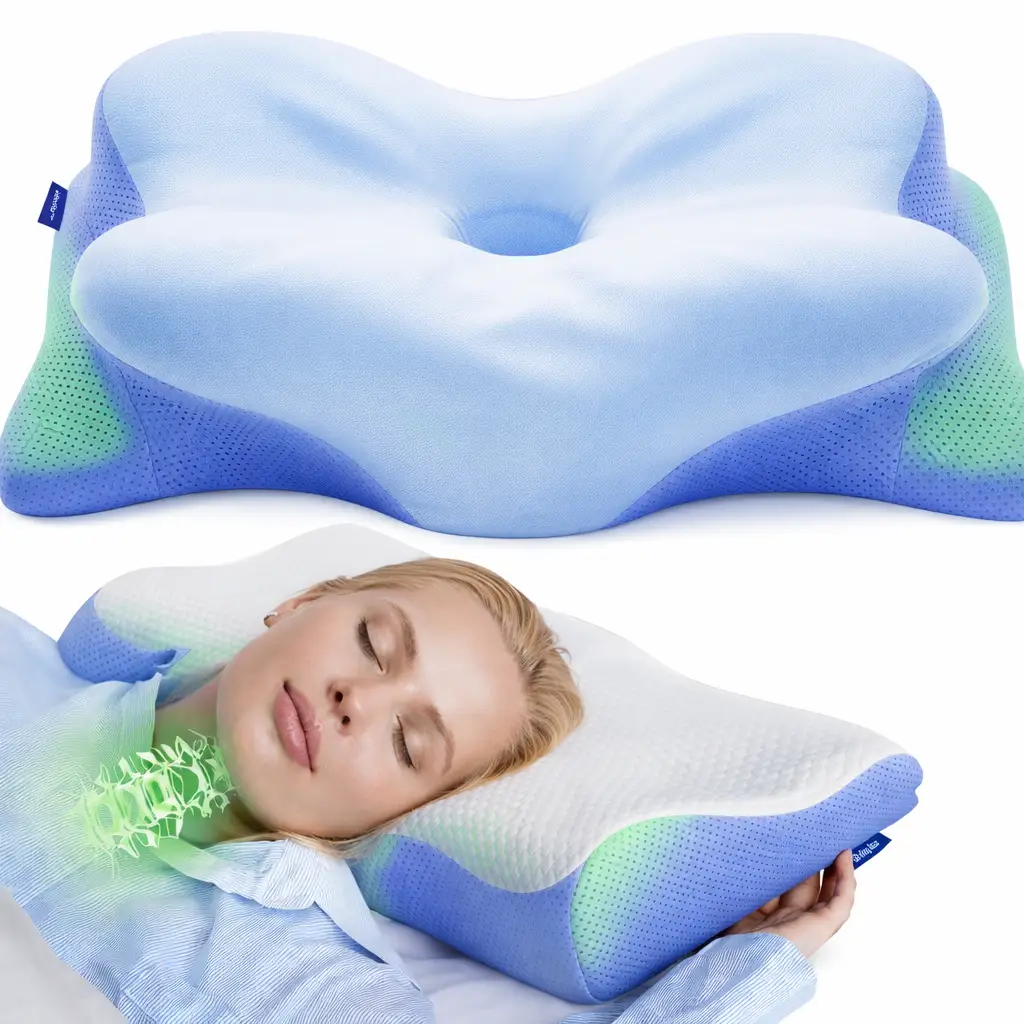
Derila Ergo Pillow's contour shape supports the neck in both back and side sleeping positions, in line with the positional principles covered in this article.
Visit Official WebsiteThis article summarizes findings from publicly available clinical and biomechanical research on positional therapy and snoring. It is provided for general education only and is not medical advice. Persistent or severe snoring, or suspected sleep apnea, should be evaluated by a licensed physician or sleep specialist.