 Derila Ergo
Sleep Posture 101: Protecting Your Neck and Back
You spend roughly a third of your life asleep, and unlike your sitting or standing posture, you have almost no conscious control over your sleep posture once you drift off. That makes the setup you fall asleep in — your mattress, your pillow, and your habitual position — one of the most overlooked factors in long-term neck and back health.
In this guide
Why Sleep Posture Matters
Your cervical spine — the neck — has a natural forward curve, and your lower back has its own inward curve as well. When you're standing or sitting with good posture, muscles and ligaments hold these curves in a relatively neutral position. When you lie down, that job shifts almost entirely to your mattress and pillow. If either one fails to fill the gaps around your neck and lower back correctly, the spine can be pulled out of alignment for hours at a stretch, every single night.
Because sleep is involuntary, you can't consciously correct a bad angle the way you might catch yourself slouching at a desk. That's precisely why researchers studying neck pain have started paying closer attention to sleep ergonomics as a treatment variable, not just workplace posture.
Back, Side, and Stomach Sleeping Compared
Each sleep position places different demands on your neck and spine:
- Back sleeping generally makes it easier to keep the spine in a neutral line, provided the pillow fills the curve under the neck without lifting the head too far forward or letting it drop back.
- Side sleeping requires a pillow tall enough to fill the larger gap between the ear and the mattress created by the shoulder, so the neck doesn't bend downward toward the mattress.
- Stomach sleeping tends to place the most strain on the neck, since the head has to rotate to one side for extended periods, and the lower back can also arch more than it should. Most posture-focused sleep guidance suggests this is the position most worth adjusting away from, gradually, if you can.
There is no universally "correct" position for every person, but back and side sleeping are generally easier to support well with the right pillow than stomach sleeping is.
What the Research Shows
Clinical and biomechanical studies consistently connect sleep posture to neck pain outcomes:
- A study on chronic neck pain noted that because sleep posture cannot be actively controlled the way sitting or standing posture can, choosing the right sleep support system may be especially important for managing pain — a point echoed across several ergonomics-focused papers.
- Simple education about recommended sleeping positions has itself been shown to help: in a study of older adults, the large majority who received guidance on proper sleep positioning reported measurable improvements after being coached on posture, without any other intervention.
- Research on cervical pillows has repeatedly found that maintaining the neck's natural curve during sleep, rather than letting it flatten or overextend, is associated with reduced muscle tension and better next-day function.
- A study on pillow materials found that different sleep positions distribute head and neck pressure differently depending on the material and shape used, which is part of why "one pillow fits everyone" is rarely true.
Signs Your Sleep Posture Needs Attention
- Waking up with neck stiffness that improves within an hour of being upright.
- Tingling or numbness in the arms or hands upon waking.
- Frequent tossing and turning, or waking up in a completely different position than you fell asleep in.
- Headaches that are noticeably worse in the morning.
- A pillow that visibly flattens or shifts out of place within the first hour of sleep.
None of these signs are a diagnosis on their own, but if several apply to you consistently, it's worth looking at your sleep setup — and speaking with a doctor or physical therapist if symptoms persist.
Practical Tips to Protect Your Neck and Back While You Sleep
- Match pillow height to your position. Side sleepers typically need a taller pillow than back sleepers to keep the spine level.
- Support the curve, not just the head. A pillow that only cushions the back of the head, without supporting the neck itself, often leaves the cervical curve unsupported.
- Avoid pillow stacking. Multiple soft pillows shift throughout the night and rarely hold a consistent shape — research has linked this habit to aggravated neck symptoms rather than relief.
- Check your mattress, not just your pillow. A mattress that's too soft or too firm changes how much pillow height you actually need.
- Give position changes time. If you're shifting away from stomach sleeping or trying a new pillow shape, expect a genuine adjustment period of one to two weeks rather than an overnight fix.
- Reassess your pillow every couple of years. Foam and fill both lose structure over time, even if the pillow still looks fine from the outside.
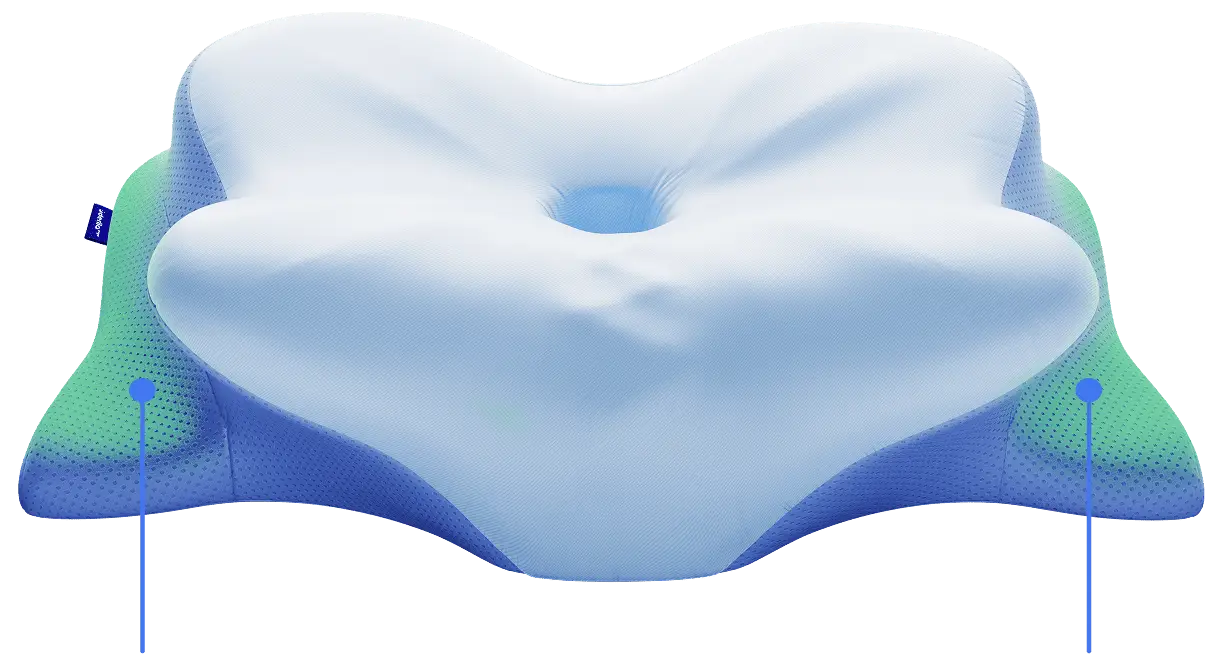
A pillow built around these same alignment principles
Derila Ergo Pillow's contour shape is designed to support the neck's natural curve for both back and side sleepers.
Visit Official WebsiteThis article summarizes general, publicly available research on sleep posture and is intended for educational purposes only. It is not medical advice. If you experience persistent pain, numbness, or headaches, consult a licensed healthcare provider.