 Derila Ergo
Understanding Ergonomic Pillows: A Guide to Better Sleep
Not every pillow is designed the same way, and the difference matters more than most people realize. An ergonomic pillow is built around the shape of your neck and spine, not just around softness. This guide breaks down what "ergonomic" actually means for a pillow, what the research says about how these pillows work, and how to think about choosing one.
In this guide
What Makes a Pillow "Ergonomic"?
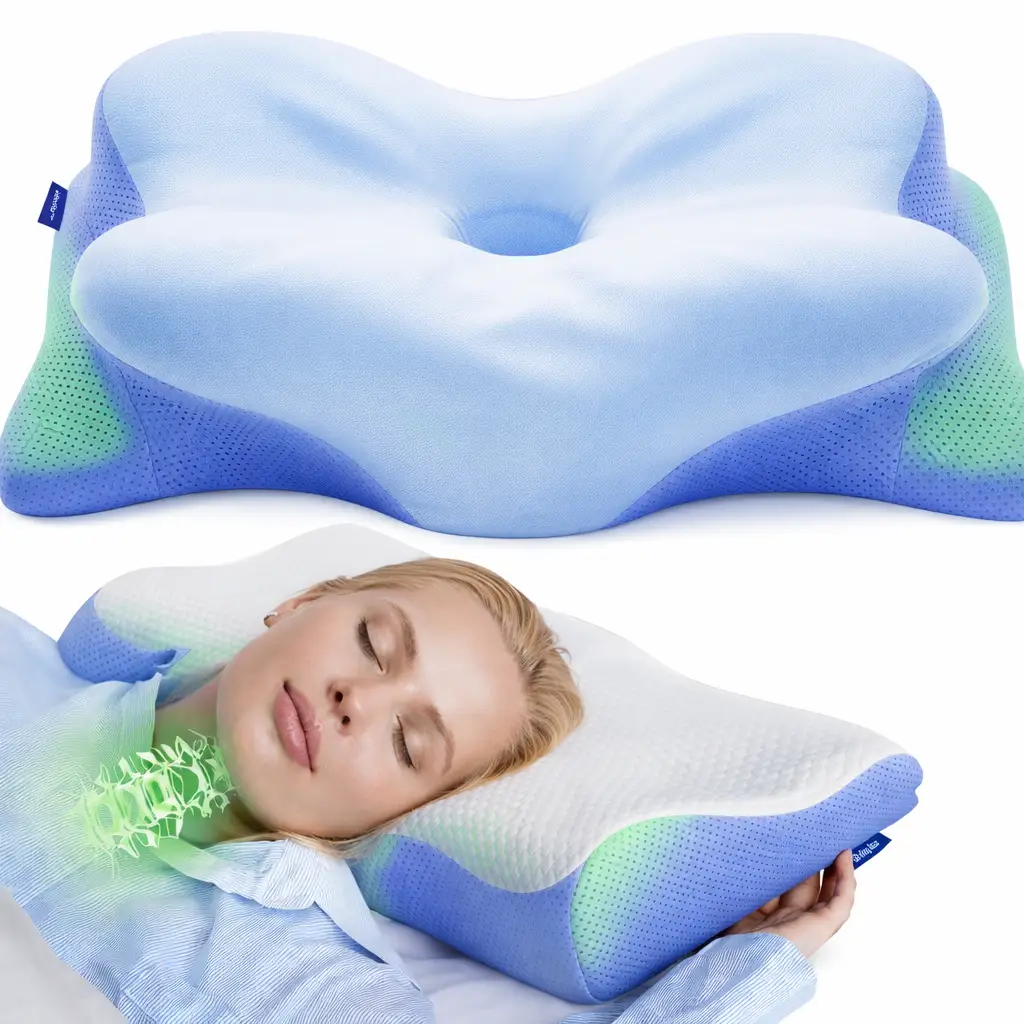
Ergonomics is the science of designing something around how the human body actually moves and rests, rather than forcing the body to adapt to the product. Applied to a pillow, that means the shape is built to fill the gap between your head, neck, and mattress in a way that keeps your spine in a neutral position — the same alignment your neck naturally holds when you stand up straight.
A standard pillow is usually a flat or slightly domed bag of fill. It relies on you compressing it into the right shape with your own head weight, and it rarely stays that shape for long. An ergonomic pillow, by contrast, is molded or structured in advance — often with a contour, a center dip, or graduated height zones — so the support is built into the object itself rather than improvised each night.
Why Pillow Shape Matters More Than Softness
It's tempting to judge a pillow purely by how soft or plush it feels in a store. But comfort in the first ten seconds is a poor predictor of how your neck will feel after seven hours of sleep. What matters far more is whether the pillow keeps your cervical spine — the seven vertebrae in your neck — in a neutral curve throughout the night.
Health and ergonomics resources note that ergonomic pillows are designed to restore normal neck posture by supporting both the neck and the head, which can reduce neck pain and increase comfort during sleep, whereas stacking multiple ordinary pillows can actually aggravate cervical spine discomfort. The core idea is that a pillow shaped for the neck helps correct poor posture and lets stressed tissue recover with less strain, rather than simply cushioning the head.
That's the essential difference: a flat pillow cushions, while an ergonomic pillow actively supports and positions.
What the Research Says About Cervical Pillows
Ergonomic and cervical support pillows aren't just a marketing idea — they've been studied in clinical and biomechanical research for years. A few consistent findings stand out:
- Posture-focused design reduces reported pain. Research on chronic neck pain patients has linked the introduction of supportive pillow designs, sometimes combined with other care, to measurable reductions in pain over time. One clinical review points out that sleep posture, alongside sitting and standing posture, is increasingly treated as a meaningful factor in managing neck pain, given how much of our lives are spent asleep.
- Sustained use matters. A twelve-month outcomes study on an ergonomic cervical pillow found that consistent use over time was associated with reductions in pain intensity, disability scores, and sleep disturbance, with the most noticeable improvements in patients over 50. The results showed that sustained use of the pillow led to significant reductions in pain intensity, disability, and sleep disruption, with the greatest improvements seen in older patients. This tells us that ergonomic pillows tend to work gradually, similar to physical therapy, rather than as an instant fix.
- Material and shape both influence pressure distribution. A biomechanical comparison of pillow materials found that different fill types distribute head pressure differently depending on sleep position, with some materials performing better for back sleeping and others for side sleeping. The comparison found that softer, moldable materials tended to lower pressure in specific positions, suggesting that material choice has a real, measurable effect on how a pillow supports the head.
- Controlled trials back up the general theory. A randomized controlled trial studying an ergonomic latex pillow in patients with cervical spondylosis examined its effect on neck posture and muscle endurance, concluding that this style of pillow may help protect the neck's natural curve during sleep. Researchers noted that this kind of pillow appears to protect normal cervical curvature during sleep by relaxing muscles and reducing pressure on the spinal discs, which can in turn help ease symptoms.
The throughline across this research isn't that any single pillow is a cure. It's that neck posture during sleep is a real, measurable variable — and pillows shaped around that posture consistently perform differently than ones that aren't.
Common Types of Ergonomic Pillows
Ergonomic pillows generally fall into a few recognizable categories:
- Contour or wave-shaped pillows — a center dip for the head with raised ridges on one or both sides for neck support, often with two different height zones for back versus side sleeping.
- Cervical roll pillows — a firm cylindrical support placed under the neck, sometimes combined with a flatter cushion for the head.
- Adjustable or layered pillows — pillows with removable inserts so you can raise or lower the loft to match your body.
- Positional or anti-snore pillows — shaped to encourage side sleeping and discourage sleeping flat on the back.
Derila Ergo Pillow falls into the contour or wave-shaped category, using a molded foam core with two support zones rather than a single fixed height. You can see the shape and materials in more detail on the main product page.
How to Choose the Right Ergonomic Pillow for You
There's no single "best" ergonomic pillow for everyone, because neck length, shoulder width, mattress firmness, and sleep position all change what "neutral alignment" looks like for your body. A few practical questions can narrow things down:
- What position do you sleep in most? Back and side sleepers generally need more height under the neck than stomach sleepers.
- How firm is your mattress? A softer mattress lets your shoulder sink in more, which usually means you need less pillow height; a firmer mattress often needs slightly more.
- Do you already have neck or shoulder pain? If so, it's worth discussing pillow height and firmness with a physical therapist or doctor rather than guessing.
- How does the material feel over a full night, not just a minute in a showroom? Give any new pillow at least a week before judging it — research on ergonomic pillow use suggests benefits build gradually rather than overnight.
Common Mistakes People Make
- Judging a pillow after one night instead of a full adjustment period.
- Stacking two regular pillows instead of using one properly shaped pillow — research specifically flags this as something that can aggravate neck pain rather than relieve it.
- Ignoring mattress firmness, which changes how much pillow height you actually need.
- Assuming a softer pillow is automatically a better pillow, when in fact under-support is one of the most common causes of morning neck stiffness.
- Buying based on marketing alone instead of checking the actual shape, material, and return policy.
See how a contour design applies in practice
Derila Ergo Pillow uses the wave-contour, dual-height approach described in this guide. Compare the design, materials, and pricing on the official page.
Visit Official WebsiteThis article is for general educational purposes and summarizes publicly available research on cervical and ergonomic pillows. It is not medical advice. If you have persistent neck pain, consult a licensed healthcare provider.